
Adam Mueller, Emily Peterson, Whitley Wynns, Steve Nisi, and Jack Turman, Jr.*
* Adam Mueller, JD, is the executive director of the Indiana Justice Project. Jack Turman, Jr., PhD, is a professor in the Department of Pediatrics and Director of the Grassroots Maternal and Child Health Initiative in the Department of Pediatrics at the Indiana University School of Medicine, Indiana University, Indianapolis, IN. Emily Peterson is a JD candidate at the Indiana University Mauer School of Law, Bloomington, IN. Whitley Wynns, MA, is a JD candidate at the Thomas M. Cooley Law School, Lansing, MI., and a project manager for the Grassroots Maternal and Child Health Initiative in the Department of Pediatrics at the Indiana University School of Medicine, Indiana University, Indianapolis, IN. Steve Nisi, JD, is a deputy public defender for the State of Indiana and writing assistant for the Indiana Justice Project.
FUNDING ACKNOWLEDGEMENT: WORK WAS FUNDED THROUGH A GRANT TO JACK TURMAN, JR., PH.D. FROM THE US DEPT. OF HEALTH AND HUMAN SERVICES, HEALTH RESOURCES AND SERVICES ADMINISTRATION.
Housing Advocacy: Community Lawyering for a Legal Paradigm Shift
The Indiana Justice Project (IJP), in collaboration with the Grassroots Maternal Child Health Initiative (GMCHI), developed Health Justice Intervention (HJI) to address evictions that deferentially negatively impact the health and well-being of women of reproductive age and their young children. The HJI falls into three legal “buckets:” (1) Know Your Rights (KYR) campaigns, (2) strategic court-based advocacy and litigation, and (3) legal education and analysis.
First, the KYR campaigns build the capacity of women in communities to claim their right to housing by providing community-based sessions to inform audiences of their rights and strategies to advocate for their rights. Second, strategic court-based advocacy and litigation clarifies and strengthens existing legal protections by vindicating the human right to housing through established legal theories and promoting innovative approaches to the resolution of housing cases. Finally, legal education and analysis builds the capacity of members of the judiciary and legal profession to protect pregnant and postpartum women from eviction within existing legal structures.
Through the community lawyering approach, IJP and GMCHI are developing and nurturing a deep relationship with communities and stakeholders such as housing advocates, researchers, health care advocates, immigration advocates, anti-hunger advocates, social services agencies, and faith-based groups. We build links between community groups and the institutions that make the laws, rules, and decisions that affect their lives.
In the following sections of this short article, we discuss the health care crisis created by evicting mothers and their children. The next section provides a short, working definition of community lawyering as understood by the collaborating advocates. Lastly, we move to a discussion of the three initiatives and their impact based off informal surveys completed by participants. While early numbers are limited and provide only anecdotal evidence of success, they nonetheless provide a backdrop for guiding future advocacy work based on community input.
EVICTIONS ARE A HEALTH CARE CRISIS
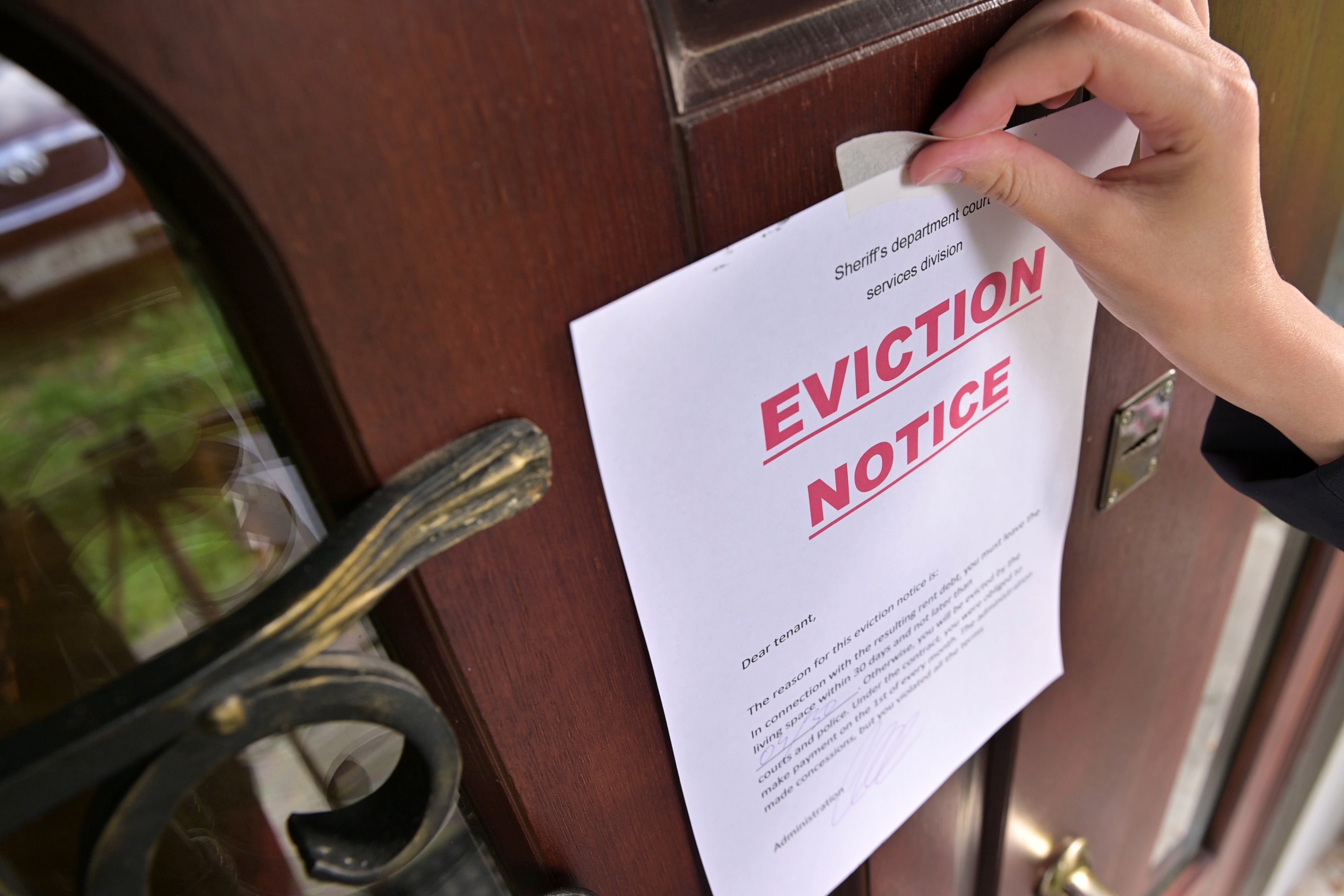
Many Hoosiers, particularly pregnant and postpartum women and their infants, face housing insecurity due to an eviction process that allows for displacement of families in as few as ten days.[1] The relationship between housing insecurity and poor maternal and infant health outcomes demands better legal protections and housing access for mothers and infants.
When it comes to the vulnerable populations of pregnant and postpartum women and their children, the risks are greater, even life-threatening. Housing insecurity results in an increased risk of preterm birth, low birth weight infants, longer neonatal intensive care unit stays and infant mortality.[2] A cross-sectional study found that “unhoused” patients were a high-risk pregnancy group.[3] A qualitative study of the effects of eviction on preterm birth noted that pregnant individuals may have to forego health and safety to address housing instability.[4] This means living with intimate partner violence, choosing rent payments over food and medicine, renting in unsafe or unhealthy neighborhoods because of the limited supply of affordable housing, and putting up with uninhabitable rental conditions due to a negligent landlords.
Severe housing insecurity, defined as homeless or threatened eviction, during pregnancy is linked to adverse outcomes at birth and age one.[5] In a study of mothers from over 20 U.S. cities, there was a 73% higher risk of low birth weights or preterm births amount infants born to mothers experiencing severe housing insecurity versus mothers who are not. These same mothers were also roughly 66% more likely to be admitted to the NICU and have extended hospital stays. The average NICU preterm infant stay is 17.6 days and costs about USD $42000.
In another study, Yamamoto found that among 15,029 pregnant women experiencing homelessness compared with 308, 242 pregnant women not experiencing homelessness within the same hospital, those experiencing homelessness were more likely to experience preterm labor and had higher delivery-associated costs compared with women not experiencing homelessness. “The findings highlight the importance for health care professionals to actively screen pregnant women for homelessness during prenatal care visits and coordinate their care with community health programs and social housing programs to make sure their health care needs are met.”[6]
Addressing housing insecurity with only individual-based medical or behavioral interventions for the pregnant or postpartum woman will not mitigate the harms. These interventions must be complimented with systemic changes that promote housing equity and protects the rights of women and children against housing insecurity. While Indiana, and the United State as a whole, lag behind international standards, the United Nations declares housing to be a human right. According to the UN, the right to adequate housing is seen as inalienable, and necessary for all citizens, but especially for women and children.[7]
UN Standards, Resolutions, and Guidelines have recognized the disproportionate harm to women when the right to housing is not recognized or enforced. Violence, economic discrimination, and other forms of lost opportunities flourish when the human right to housing is categorically denied.[8] Unfortunately, the United States is steadfast in its non-recognition of housing as a human right leaving Hoosiers with few meaningful protections for tenants.
COMMUNITY LAWYERING FRAMEWORK
One of the earliest uses of the term community lawyering appeared in an early article written by Stephen Wexler, “Practicing Law for the Poor People.”[9] Community lawyering is now broadly considered a “collaborative, community-based approaches to legal services” in which lawyers work within communities to help address systemic injustice.[10] As described by community lawyering practitioners: “[C]ommunity lawyers believe that leadership must come from within our client/partner organizations. Real, lasting change can only result from an oppressed group itself identifying its grievances and developing demands and a strategy for achieving them.”[11] Community lawyering is designed to be responsive to the needs in communities through meaningful interactions with the communities we serve.
The Eviction Crisis: Community Lawyering and What We Are Doing About it
Our first step in implementing our three strategies was to identify the inequitable social, economic, and political systems that drive pregnant women and their children into housing insecurity. We collectively utilized information from available data, previous research, and the perspectives of women in communities impacted by inequity. Quantitative and qualitative data from this research is both useful in launching community lawyering efforts and equitable partnerships with community members.
Below are some key themes that we identified from the data that helped guide the implementation of our housing programs.
- Structural Racism: Black and Hispanic households are nearly twice as likely to experience housing insecurity as White households.[12] Non-white families are also more likely to face housing discrimination.[13]
- Economic Inequities: There is a lack of affordable housing and rental support, quality jobs, limited legal protections and few safety nets for pregnant workers, making it difficult for a pregnant woman to afford rent.[14]Low-income families are significantly cost-burdened by housing (spending more than 30% of their income on housing.).[15] Low-income families have fewer options and must contend for substandard or unhealthy living conditions, in neighborhoods with fewer supportive amenities including quality schools, access to health care, and safe public spaces.
- Discrimination against women and children: Families are far more likely to experience evictions.[16] The presence of children in a household is the most important factor in determining the likelihood of an eviction judgment entered against renters.[17]
- Lack of Legal Services/Legislative Action: According to a 2019 report assessing Indiana’s legal needs system, for every ten individuals who required civil legal assistance, only three received full representation.[18] In 2022, the legal services corporation (the largest funder of civil legal aid) estimated that 92% of the legal needs of low-income Americans go unmet.[19]
Indiana does not have an explicit statutory provision for tenants to withhold rent for needed repairs like many other states.[20] Similarly, Indiana’s state legislature has preempted several local laws addressing housing insecurity, like prohibiting source of income discrimination for renters’ participation in subsidized housing programs.[21]
Armed with this information, we developed our three-part community lawyering approach. Using the tools described above, we are seeking to maximize the rights’ protections available—by equipping communities and individuals to address housing needs. Informed by the community lawyering model, each month we convene a work group consisting of Grassroots Maternal Child Health Leaders. We use this opportunity to brainstorm different ways to execute on our strategies, and how hypothetical actions would impact individuals in “the real world.” Below is a report out on our first year of progress—including successes and lessons learned.
Strategy 1: Know Your Rights
IJP created handouts on tenant rights in English, Spanish, French and Arabic for organizations and individuals serving mothers at risk of eviction. A team of law and PhD students helped to develop communication, recruitment, and evaluation materials for KYR sessions, including creating a community sign up link for KRY sessions.[22] We connected with several partner organizations and agencies to make sessions available to the individuals they serve. The coordination of communication and recruitment strategies yielded the following results:
Participation Associated with our Know Your Rights Sessions through December 2023
| Participants | 102 |
| Participants completing pre-survey | 86 |
| Participants complete pre- and post-survey | 47 |
Demographics of Participants
| Race | Gender | |||
| American Indian | 2 | Female | 70 | |
| Black | 29 | Male | 16 | |
| Multiracial | 5 | Nonbinary | 2 | |
| White | 46 | Other | 2 | |
| Not Reported | 5 |
Demographic of Female Participants
| Race | Number of Participants |
| American Indian | 2 |
| Asian | 1 |
| Black | 24 |
| Hispanic | 8 |
| Multiracial | 3 |
| White | 33 |
| Not Reported | 5 |
Demographic of Pregnant Participants
| Race | Number of Participants |
| American Indian | 1 |
| Black | 2 |
| Multiracial | 1 |
Surveys were developed and available to participants before and after sessions to beta test parts of the presentation. Quantitative survey analyses are underway although we recognize that such a limited number of self-reporting responses does not necessarily indicate success or failure. These numbers, while imperfect, help us paint a picture of what the community needs.
Considering the qualitative feedback received, we have incorporated eviction sealing information in our KYR sessions. Based on our surveys, renters are interested in receiving information about tenant rights and Indiana Tenant-Landlord law, but they also wanted help with eviction-harm mitigation. Indiana Code § 32-31-11-3 allows for a “motion by tenant to prohibit disclosure of records in eviction action upon dismissal, judgment in favor of tenant, or overturning of judgment against tenant; court order; timing of order; appellate court duties; pending eviction actions in residential eviction diversion programs.” In many cases, renters are denied housing because an eviction was filed against them, even if the tenant receives a favorable ruling.
Strategy 2: Strategic Court-Based Advocacy and Litigation
We focused on relationship building within the legal community, representing individuals in eviction proceedings, and putting ideas into the public sphere. First, recognizing that housing insecurity implicates what is essentially a human right, we look to the protections in state law that further this right—such as the warranty of habitability in Indiana Code § 32-31-8-1 et. seq. We have spent a significant amount of time working within the arenas of rights enforcement—namely judicial and legal institutions. This includes membership on the Coalition for Court Access, an Indiana Supreme Court institution that coordinates and organizes the civil legal aid programs for individuals with limited financial resources.[23]
Along with participation in the Coalition for Court Access, Indiana Justice Project staff started taking cases for strategic representation in Indiana’s small claims proceedings representing individuals facing eviction proceedings. There are several objectives involved with this representation. First, we are a client-centered legal organization representing individuals in achieving their specific goals whether that be staying in their home or requesting additional time to vacate. Second, we use these opportunities to start building a framework for achieving systematic changes. Through this process, we are learning what obstacles and opportunities exist for broader advocacy by showing up in courts on a regular basis. This includes understanding tenant needs and motivations when facing a possible eviction with property owners and their counsel to understand their business practices and objectives. Finally, it allows us to engage with judicial officers to understand how they view and rule on routine eviction cases, and the role they play in mitigating the harms of eviction. Under this initiative, in 2023, IJP represented eleven adults in eviction and housing related court matters. Representation in these eleven cases yielded the following results:
Demographics of Participants
| Race | Number of Participants |
| Black | 8 |
| Hispanic | 1 |
| White | 1 |
| Not Reported | 1 |
| Pregnant Parent | 0 |
| Households with Children | 14; 7 households with children under 3 |
During each contact, all clients received advice and counsel on eviction proceedings and resources. In one case, we were able to get repairs done to an apartment in which small children lived by preparing and sending a demand letter to the landlord. In another case, the eviction had already occurred prior to our involvement and the landlord was attempting to remove the client’s possessions from the home which would have either been placed in storage or thrown away. The Judge gave the client a hearing and the parties worked out an agreement for client to pick up her and her four children’s property. One of our advocates drove the client home immediately following the hearing to ensure access to the property.
In another case, a family facing an eviction had a pending rental assistance application with the city of Indianapolis. The Judge delayed the eviction order for a period so that the rental assistance application could be reviewed and approved. This practical, procedural solution allowed the tenant to remain eligible for rental assistance because, at the time, tenants were no longer eligible for rental assistance once an order was issued. This case allowed us to explain to the Judge how the technicalities of the rental system application work by calling the rental assistance navigator to testify.
The cases mentioned above were handled in the Center Township Small Claims Court, an area of Indianapolis with several zip codes of persistently high infant mortality rates. Our hope is that as we develop systems changes strategies, the residents of Center Township will benefit from improvements. In year one, we focused on establishing a rapport with courts through meaningful community lawyering on behalf of Center Township residents. In years two through five, representation will serve as the basis for systemic strategies. This will include the presentation of established and novel legal arguments and defenses in cases, proposed rule changes, civil appeals, and legislative and policy analysis.
Regarding the harm of past evictions, since the enactment of Indiana Code § 32-31-11-3, community-based eviction sealing legal clinics have become common in Indiana. These clinics are often hosted by non-profit legal aid providers with the assistance of private pro bono attorneys. Individuals can speak with an attorney—free of charge about their case(s). The attorneys can identify cases eligible for sealing and prepare court petitions on behalf of the renter.
Some clinics offer services for tenants to electronically file their motion while others require tenants to file the motion in person in the proper court jurisdiction. IJP adopted this eviction legal clinic model by partnering with North United Methodist Church in Indianapolis and several pro bono attorneys. Faith-based organizations (FBO) are trusted organizations within the community and are often involved with social justice initiatives. By partnering with FBOs, we were able to advertise and reach out to the community about the eviction sealing legal clinic in more effective ways. We focused on identifying and training attorneys offering their pro-bono services for the clinic. Our first two eviction sealing clinics yielded the following results:
First Eviction Sealing Clinic Numbers
| Attendees | 104 |
| Eviction Sealing Motions Filed | 40 |
| Ineligible Attendees | 40 |
Second Eviction Sealing Clinic Numbers (hosted by Indiana Legal Services)[24]
| Attendees | 75 |
| Eviction Sealing Motions Filed | 180 |
| Ineligible Attendees | Unknown |
Strategy 3: Legal Education and Analysis
Finally, we have engaged the judicial and legal community in Indiana writ large in the form of two pieces of written advocacy. First, we published a piece for the Indiana Bar Association monthly magazine, Res Gestae. In this piece, we argue that the law, and courts, should consider the traumatic effect an eviction may have on mothers and babies when resolving rental disputes.[25] We expect to expand on these arguments further in the form of court briefs and additional written publications.
Fran Quigley, one of Indiana’s most valued housing advocates, consistently references this Res Gestae article in presentations across the State as an example of novel approaches to securing housing as a right. Although this is only one example of downstream legal education and analysis, IJP and its partners are determined to inject creative solutions on housing insecurity and evictions into the Indiana legal discourse.
At our request and with our guidance, the Notre Dame Clinical Law Center created a “report card” on how Indiana’s laws and practices stack up against the American Bar Association’s ten guidelines on state residential eviction laws.[26] The report concluded:
While Indiana meets a few of the ABA guidelines, it falls short on most. Indiana renters may be evicted from their homes with little notice and without having violated their leases. Renters are rarely represented by attorneys. They are required to defend themselves in unfamiliar courtrooms, often against attorneys representing landlords, without a knowledge of the law or an opportunity to know in advance what the landlord may argue. Eviction hearings are quick affairs with limited opportunities for renters to present a defense. Even when renters are able to avoid an eviction judgment, court records are not automatically sealed; the mere fact of having faced an eviction complaint may prevent the renter from passing screening for future apartments.[27]
We are continuing to work with this clinic as well as students and faculty from several law schools—including Indiana University McKinney School of Law to analyze and address systemic eviction harms through a legal lens. This will include an analysis on Indiana’s current eviction record sealing law, and potential court process changes to the enforcement of statutory habitability protections.
Lastly, during our first housing justice conference hosted in June 2023, we had approximately fifty (50) housing advocates, including legal aid attorneys, community and tenant organizers, policy advocates, and researchers attend. At this meeting, we discussed several topics related to minimizing the harms of housing insecurity on low-income renters. We also discussed our work including the completion of a report summarizing the scientific research on how poor housing conditions and evictions can affect health outcomes.
V. Conclusion
Community Lawyering is a model rooted in responsiveness to community needs. Our collaborative Health Justice Intervention endeavor to use this principle to identify and address barriers to housing security from poor conditions and evictions, to sealing past records. In the first year of the project, we’ve built relationships with communities through our Know Your Rights presentations and eviction sealing clinics. We’ve tested legal theories and addressed gaps in the legal system through our strategic court-based advocacy. And, finally, we’ve used our experiences to help deepen the understanding of how these systems might be improved via policy analysis.
Over the next several years, we plan to continue building on these principles, measuring our successes and challenges along the way, in the hopes of shifting the legal treatment of housing insecurity in Indiana.
[1] Ind. Code Ann. § 32-31-1-6 (West 2024).
[2] J. D. DiTosto et al., Housing Instability and Adverse Perinatal Outcomes: A Systematic Review, 3 American Journal of Obstetrics & Gynecology Maternal-Fetal Medicine (2021), https://doi.org/10.1016/j.ajogmf.2021.100477.
[3] J.M. Green et al., Trends, Characteristics, and Maternal Morbidity Associated With Unhoused Status in Pregnancy, 6 JAMA Network Open 1, 1 (2023), https://jamanetwork.com/journals/jamanetworkopen/fullarticle/2807786.
[4] Kendle Kuechle, The Impact of Evictions on Preterm Births and Family Health Outcomes: A Qualitative Analysis 8 (Univ. of Cal., Berkley eds., 2021), https://pretermbirthca.ucsf.edu/sites/g/files/tkssra2851/f/wysiwyg/The%20Impact%20of%20Evictions%20on%20Preterm%20Births%20and%20Family%20Health%20Outcomes.pdf#:~:text=Housing%20instability%20and%20evictions%20have%20strong%20negative%20implications,requiring%20a%20longer%20hospital%20stay%20or%20NICU%20admission.
[5] Kathryn M. Leifheit et al., Severe Housing Insecurity during Pregnancy: Association with Adverse Birth and Infant Outcomes, 17 Int. J. of Environmental Res. And Public Health 1, 2 (2020), https://www.mdpi.com/1660-4601/17/22/8659.
[6] Ayea Yamamoto, et. al., Comparison of childbirth delivery outcomes and costs of care between women experiencing vs not experiencing homelessness, 4 JAMA network open (2021), https://pubmed.ncbi.nlm.nih.gov/33885772/.
[7] Office of the United Nations High Commissioner for Human Rights, Women and the right to adequate housing (2020),https://www.ohchr.org/en/special-procedures/sr-housing/women-and-right-adequate-housing.
[9] Stephen Wexler, Practicing Law for Poor People, 79 Yale L.J. 1049 (1970).
[10] Harvard Law School, Community Lawyering/Grassroots (2022), https://hls.harvard.edu/bernard-koteen-office-of-public-interest-advising/about-opia/what-is-public-interest-law/public-interest-work-types/community-lawyering-grassroots/.
[11] Charles Elsesser, Community Lawyering – The Role of Lawyers in the Social Justice Movement, 14 Loyola Journal of Public Interest Law 374, 384 (2013).
[12] F. Michas, “Share of renting households experiencing housing insecurity in the United States from 2017 to 2020, by race, ethnicity,” Statista (December 8, 2023) https://www.statista.com/statistics/1350801/share-of-households-experiencing-housing-insecurity-us-race-ethnicity/.
[13] Margery Austin Turner et al., Housing Discrimination Against Racial and Ethnic Minorities 2012 (US Dep’t of Hous. And Urb. Dev. eds., June 2013), https://www.huduser.gov/portal/Publications/pdf/HUD-514_HDS2012.pdf.
[14] Chad Shearer et al., Advancing opportunity in Central Indiana, (Brookings Inst. eds., December 2018), https://www.brookings.edu/wp-content/uploads/2018/12/2018.15_brookingsmetro_indy-opportunity-industries_report_shearer-shah-muro.pdf
[16] Noah M. Kazis, Fair Housing for A Non-Sexist City, 134 Harvard Law Review 1683, (2021).
[17] Deena Greenberg et. al., Discrimination in Evictions: Empirical Evidence and Legal Challenges, 51 Harvard Civil Rights-Civil Liberties Law Review 115, 120-21 (2016).
[18] Victor D. Quintanilla and Rachel Thelin Indiana Civil Legal Needs Study and Legal Aid System Scan, (Indiana Univ. eds., 2019), https://www.repository.law.indiana.edu/cgi/viewcontent.cgi?article=1206&context=facbooks.
[19] Legal Services Corporation, “The 2022 Justice Gap Study” https://justicegap.lsc.gov/resource/executive-summary/ (last visited June 28, 2024).
[20] Jacob Purcell, A Decent Place to Live: Improving Indiana’s Public and Private Habitability Enforcement Mechanisms 2 (Ind. Univ. Robert H. McKinney Sch. of L. eds., 2023).
[21] Ind. Code Ann. 36-1-3-8.5 (West 2023).
[22] Internal reports on file with author.
[23] Indiana Judicial Branch Office of Judicial Administration, “Coalition for Court Access,” https://www.in.gov/courts/admin/diversity/court-access/.
[24] IJP staff participated in the Indiana Legal Services Clinic, but we did not organize the second eviction clinic referenced here. We have learned from our colleagues at ILS about how to improve and refine the sealing clinic process and thank them all for their guidance.
[25] Steven Nisi et. al., Eviction Trauma: Rethinking an Extreme Remedy to a Contract Dispute, Res Gestae, June 2023, https://cdn.ymaws.com/www.inbar.org/resource/resmgr/pdfs/June_2023_RG.pdf.
[26] Robert L. Jones et. al., Eviction Protections for Renters: Does Indiana Make the Grade? (Notre Dame Clinical L. Cen. Eds., 2023).
 Indiana Law Review